Plant and equipment is often the most valuable asset a contractor brings to a project — and one of the most administratively complex to keep correctly insured. A fleet that moves between provinces, grows over time, and operates across multiple sites creates an ongoing administrative challenge that directly affects how a policy performs when a claim is made.
We administer Plant All Risk (PAR) insurance on behalf of brokers placing engineering cover for construction and civil engineering clients. Our focus is on keeping the policy accurate throughout its life, not just at inception.
If you have a PAR account to place or a construction book you want administered by a specialist, call us on +27 11 482 9288 or contact us here.
A PAR policy provides all risks indemnity for sudden and accidental physical loss or damage to construction plant and equipment. Cover applies whether the machine is at work on site, in transit between locations, or in temporary storage.
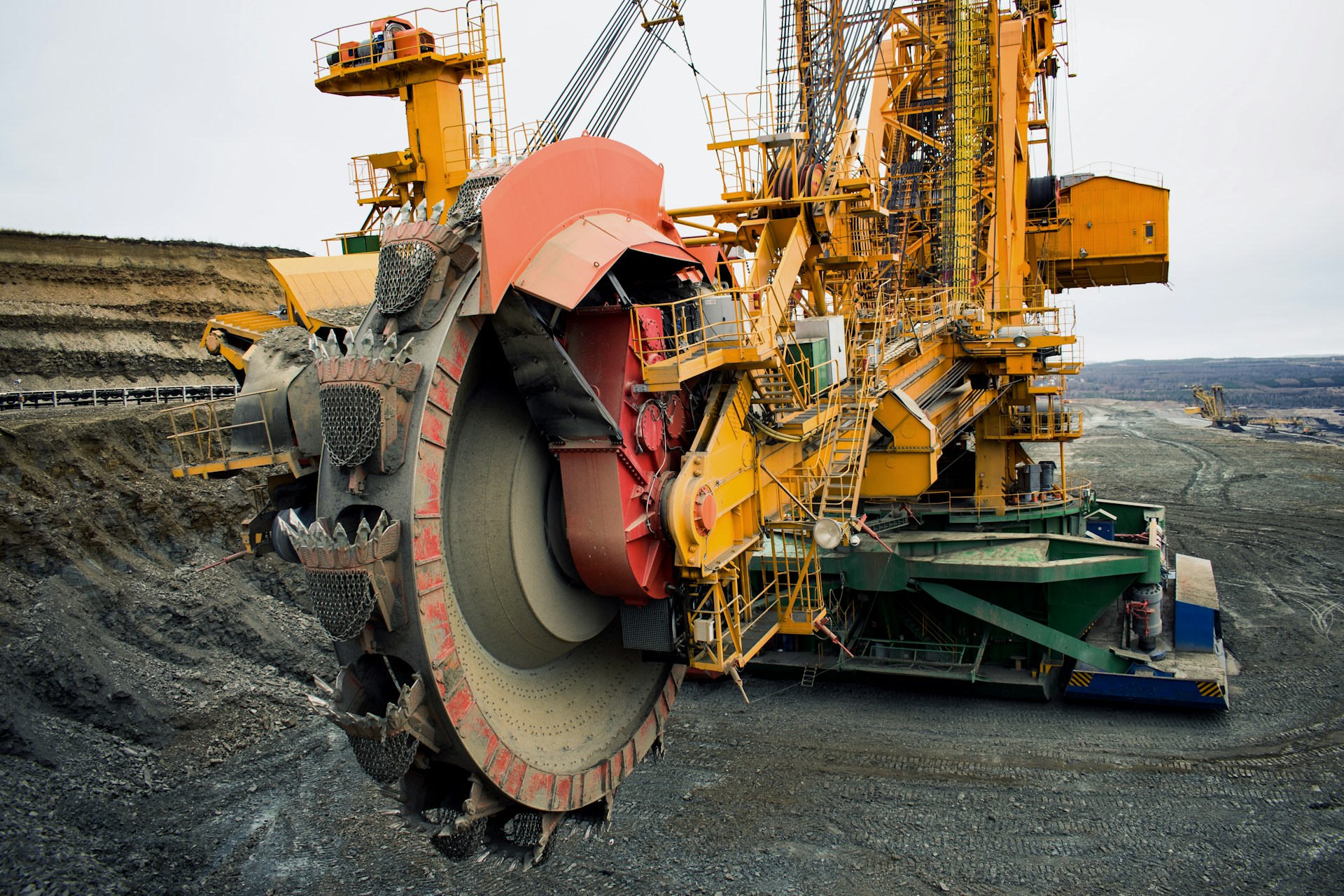
The equipment typically covered includes mobile yellow metal plant — excavators, TLBs, bulldozers, graders, front-end loaders, dump trucks, and similar machinery used in construction and civil engineering operations — as well as non-mobile plant such as generators, compressors, and compactors that support site activities.
Standard cover generally extends to transit and loading operations, including damage sustained during transport between depot and site and during loading and off-loading.
Depending on your client’s operations, a standard PAR policy may need to be extended to provide adequate cover. Extensions commonly available include:
Hired-in plant
Where a contractor regularly uses rented equipment, the policy can be extended to cover damage to plant the insured does not own. Without this extension, hired-in machinery is excluded.
Continuing hire charges
If a hired machine is damaged and out of commission, the contractor may remain liable for ongoing hire costs. This extension covers those charges during the repair period.
Tool of trade liability
Covers third party property damage caused by a machine while it is being operated as a working tool on site. This is distinct from road risks liability, which applies while the machine travels on a public road.
Road risks liability
Required where machines are self-propelled between sites on public roads. Not automatically included in a standard PAR policy.
One question worth asking at placement is whether your client’s operations involve any of these exposures and whether the policy has been specifically extended to address them. In our experience, gaps in this area are more common than brokers expect.
If you are unsure how a client’s current PAR policy is structured, we are happy to take a look.
One misconception we frequently encounter is the assumption that a Contractors All Risk policy covers plant and equipment on site. It does not.
A CAR policy covers the contract works — the structure or civil engineering project being built. The plant and equipment used to carry out that work is a separate exposure requiring a separate PAR policy. A contractor whose excavator is damaged on a CAR-insured project has no claim under the CAR policy for the machine itself.
This distinction matters at every renewal conversation with a construction client. Where a broker is placing both CAR and PAR cover, confirming there are no gaps between the two policies is part of sound placement practice.
The technical terms of a PAR policy are generally straightforward. Where claims complications arise, the cause is almost always administrative.
Asset register accuracy
A PAR policy covers the plant listed on the schedule at the values declared. Contractors regularly acquire new machines, dispose of old ones, and retire equipment without informing their broker. When a machine that has not been added to the policy is damaged, the insurer is not obliged to pay.
We maintain asset registers for all PAR accounts we administer and follow up when changes are reported. Brokers who work with us are not exposed to the risk of undisclosed fleet changes surfacing at claims time.
Territorial limits and site locations
PAR policies are typically written within defined territorial limits. When a machine moves to a province or project location that falls outside those limits and the policy has not been updated, cover may not respond.
This is one of the most avoidable causes of claim complications and one we manage proactively. When plant moves, the policy is updated. We do not wait for renewal.
Underinsurance and the average clause
Replacement costs for construction plant have increased significantly over recent years, driven by import costs, exchange rate movements, and supply constraints. A contractor who last reviewed their declared values three or four years ago may be substantially underinsured today.
Where the insured value of a machine is lower than its replacement cost at the time of a claim, the average clause applies. The insurer pays proportionally — if a machine worth R2 million is insured for R1 million, the payout on any claim is reduced by 50 percent. The contractor bears the shortfall.
We review declared values at every renewal and flag underinsurance risk to the broker before it becomes a claims issue.
If any of these challenges sound familiar on an existing account, it may be worth a conversation.
When placing or reviewing a PAR policy, the following are worth confirming before binding cover:
Addressing these at inception avoids the majority of complications we see at claims time.
We administer PAR insurance as part of our engineering insurance offering. When you place PAR business through us, we handle quotations, policy inception and documentation, mid-term endorsements for fleet and location changes, annual renewal reviews including declared value assessments, and claims coordination when an incident is reported.
We understand engineering insurance. When a broker calls about a PAR query, they are speaking to people who know what a TLB is, understand the territorial limit issue, and can turn around an endorsement the same day.
Polico Africa is registered with the FSCA as a Financial Services Provider (FSP 4598).
No. A CAR policy covers the contract works, the structure or project being built.
No. Hired-in plant must be specifically included as a policy extension. Without it, damage to equipment the insured does not own is excluded.
If the machine is operating outside the policy's territorial limits and the schedule has not been updated, the insurer may decline the claim. Updating the policy when plant moves to a new location is an essential part of correct PAR administration.
Declared values should reflect the current cost of replacing each machine with an equivalent item at today's market prices — not the original purchase price. Values should be reviewed at every renewal.
If a machine is insured for less than its actual replacement value at the time of a claim, the average clause reduces the payout proportionally. A machine worth R2 million insured for R1 million results in a 50 percent reduction on any claim settlement.
Still have questions? Contact us and let’s chat.
If you place engineering insurance for construction or civil engineering clients and are looking for a specialist administration partner, we would welcome the conversation.

Reliable short-term insurance administration
support for South African brokers. Reliable quotes, seamless claims, and trusted compliance since 2005.
Polico Africa (Pty) Ltd | FSP 4598 | FSCA-Registered | POPIA Compliant
Copyright © 2026 Polico Africa. All Rights Reserved.
Marketing & Design By Ntsakisi